Domestic carmakers take targeted measures to tackle the arrival of Tesla FSD
Just one week after the supervised version of Tesla Full Self-Driving (FSD) officially launched in China, BYD, China’s largest domestic automaker, rolled out its trump card by releasing the world’s first comprehensive safety guarantee policy for urban navigation-assisted driving. This targeted strategic move is widely regarded by the industry as a head-on challenge posed by China’s smart driving sector to the incoming Tesla FSD.
On May 21, 2026, Tesla officially announced the launch of its supervised FSD in China. Having amassed over 3 billion miles of driving data in North America, the system was described by Elon Musk as Tesla’s core competitive moat. Nevertheless, the FSD introduced to the Chinese market comes with notable limitations: it is only compatible with new vehicles equipped with HW4.0 hardware, carries a one-time purchase price of 64,000 RMB, and currently only supports highway navigation functions, while urban driving features are still pending regulatory approval. More importantly, hampered by semiconductor export controls, Tesla’s AI training center in China suffers from insufficient computing power. Industry insiders generally estimate that it will take no less than 3 to 6 months for FSD to achieve full adaptation to China’s complex road conditions.
“FSD has arrived far too late,” an anonymous analyst specializing in China’s smart driving industry commented to our publication. “Had it entered the market three years ago, it might have achieved an overwhelming competitive advantage. But China’s smart driving market in 2026 is vastly different from what it was back in 2023.”
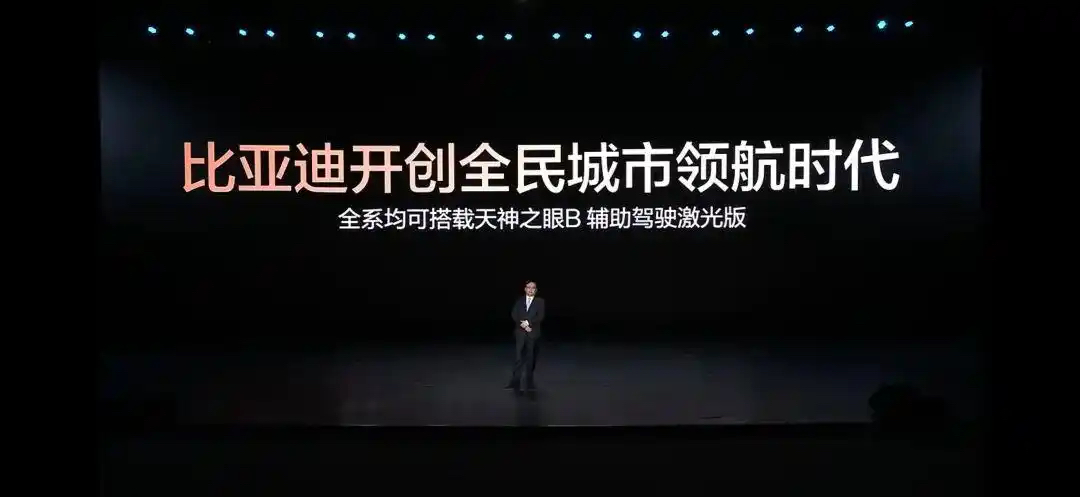
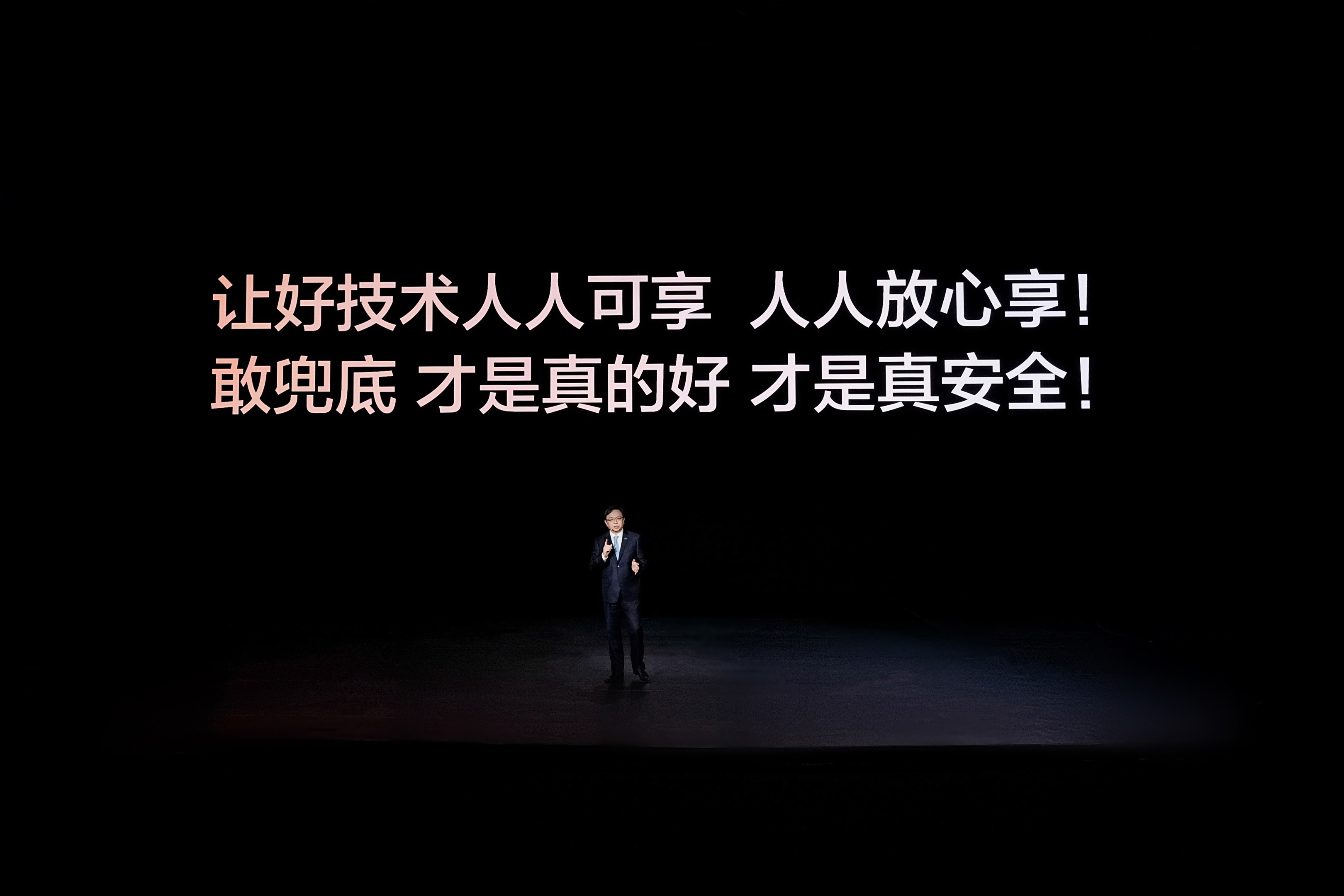
Exactly seven days after the official announcement of FSD’s entry into China, on the evening of May 28, BYD Chairman Wang Chuanfu unveiled a groundbreaking policy at the brand’s intelligent strategy launch event that sent ripples across the global automotive industry. BYD will provide full safety coverage for urban navigation-assisted driving to both new and existing vehicle owners equipped with its DiPilot A and B systems. Under compliant usage scenarios, BYD shall bear full financial liability for any accidents caused by the driving system, with no upper limit on compensation. Claims under this policy will not involve the vehicle owner’s personal auto insurance and will not affect insurance premiums for the subsequent year. This marks the world’s first public commitment by an automaker to assume full liability for accidents arising from assisted driving functions. Wang Chuanfu stated plainly at the event: “A reliable safety guarantee defines premium smart driving; taking full accountability embodies genuine safety.”
On the same occasion, BYD also unveiled its fully self-developed 4-nanometer Xuanji A3 smart driving chip, delivering a single-chip computing power of 700 TOPS. Li Yunfei, Vice President of BYD, later emphasized on social media that BYD is the world’s only automaker with end-to-end chip manufacturing capabilities. Meanwhile, BYD set the one-time option price for its full-fledged urban navigation driving function at 12,000 RMB, granting lifelong usage rights upon a single payment.
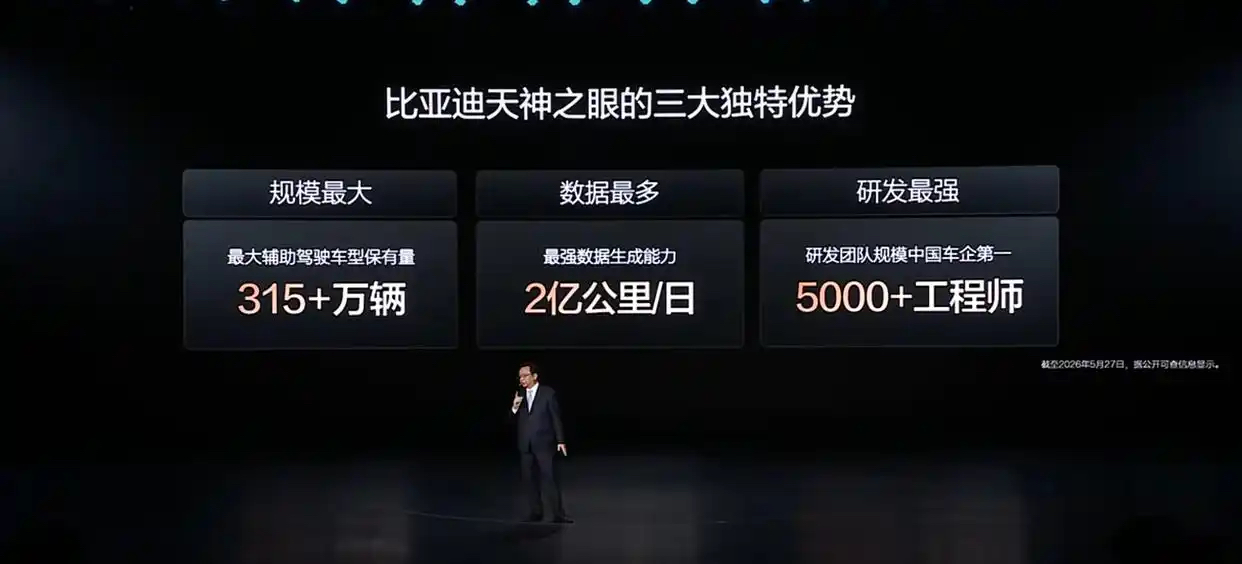
This combined strategy directly targets three major weaknesses of Tesla FSD in the Chinese market. First is the trust deficit. Chinese consumers have long held concerns over the safety of smart driving technologies. BYD’s tangible liability commitment addresses consumers’ reluctance to adopt such systems, whereas FSD still adheres to its global standard clause holding end users fully responsible for all incidents. Second is the cost disparity. The 64,000 RMB price tag of FSD stands in stark contrast to BYD’s DiPilot B system priced at 12,000 RMB with comprehensive safety coverage, creating an insurmountable price gap in the mainstream 150,000-RMB vehicle segment. Third lies in the data and ecosystem barrier. Over 3.15 million BYD vehicles fitted with smart driving systems are currently on China’s roads, generating 200 million kilometers of local driving data every day — a scale that FSD cannot match in the short term.
It is worth noting that BYD is not the only Chinese automaker responding to FSD’s arrival. Brands including Huawei and Xpeng have also announced plans to accelerate the iteration of their smart driving technologies. Among all competitors, however, BYD’s strategy proves the most disruptive. It has elevated the competition in smart driving from a contest of algorithm performance to a test of corporate accountability to users, greatly undermining the technological advantage that FSD has long prided itself on.
Undoubtedly, Tesla FSD’s entry into China will accelerate the reshuffling of the domestic smart driving market. Current market dynamics indicate that Tesla is not facing an untapped market, but a robust domestic industry cluster that has established complete technological, data and liability assurance systems. While it may not be difficult for FSD to gain market access in China, most industry observers remain pessimistic about its prospects of winning over Chinese consumers.
Editors' Picks